
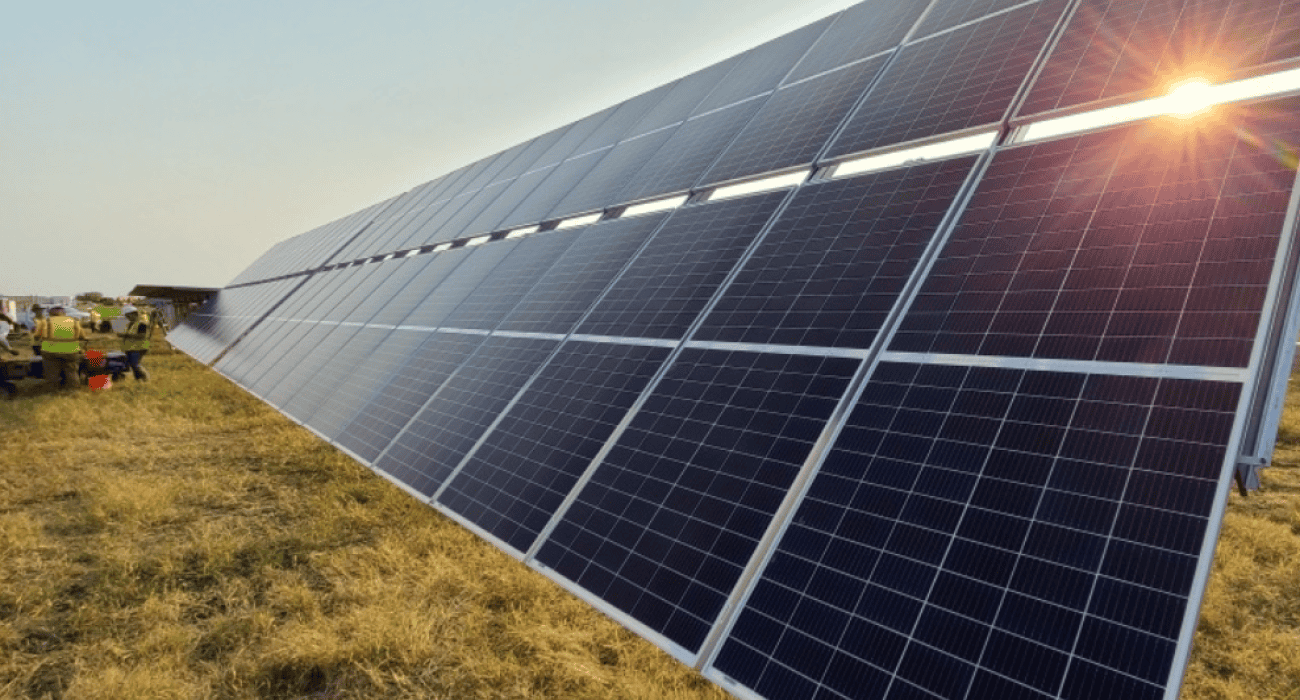
The solar industry is scaling at record speed — but solar construction hasn’t always scaled smartly.
Despite advances in module efficiency, racking systems, and project financing, construction teams still face the same on-site challenges: labor shortages, unpredictable schedules, safety risks, and costly inefficiencies that ripple through an entire project.These challenges don’t exist because teams lack experience or effort. They exist because traditional construction methods weren’t designed for today’s scale.
That’s where robotics — deployed as part of a coordinated system — fundamentally changes the game.
What’s Really Holding Solar Construction Back
1. Labor Constraints and Physical Strain
Solar construction is physically demanding. Crews spend long days lifting heavy modules, walking uneven terrain, and performing repetitive tasks that increase fatigue and injury risk.
The result:
- Slower installation rates
- Higher turnover
- Increased safety incidents
- Difficulty staffing large or remote projects
Human crews are indispensable — but asking them to carry the entire physical burden limits how fast and safely projects can scale.
2. Bottlenecks Between Construction Phases
Even when individual teams work efficiently, projects often stall because one phase gets ahead of another.
Common examples:
- Modules installed faster than they can be fastened
- Racking not ready when panels arrive
- Materials delivered too early — or too late
- Crews waiting for equipment, inspections, or layout corrections
Speed in one area doesn’t help if the system isn’t synchronized. In fact, it can create risk.
3. Excess Motion, Waiting, and Rework
On large solar sites, unnecessary movement adds up fast:
- Workers walking miles per day
- Panels being repositioned
- Tools and materials moved multiple times
- Errors discovered late, requiring rework
Each inefficiency may seem small in isolation — but multiplied across thousands of modules, they become major cost and schedule drivers.
4. Safety and Quality Risks
Manual installation increases variability:
- Inconsistent placement
- Improper torque
- Missed fasteners
- Panels left unsecured during weather events
These issues don’t just impact performance — they create safety hazards and long-term liability.
Why Robotics Is the Turning Point — If Done Right
Robotics in solar construction isn’t about replacing crews or chasing headline speed numbers.
It’s about eliminating waste, reducing risk, and orchestrating work across the entire site.
When robotics is integrated thoughtfully, it addresses pain points that humans alone can’t sustainably solve.
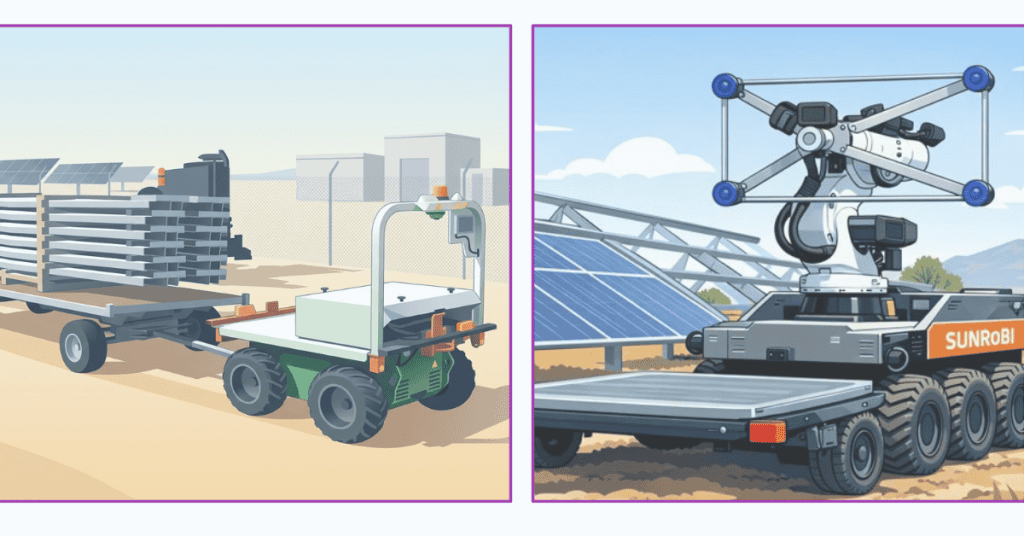
How Robotic Systems Solve These Challenges
1. Reducing Physical Strain While Increasing Consistency
Robotic systems handle the most repetitive and physically demanding tasks:
- Module handling and placement
- Precise alignment
- Repetitive fastening operations
This allows human crews to focus on supervision, quality control, system coordination, and problem-solving — where people add the most value.
The result is a safer job site, more consistent output, and better long-term workforce sustainability.
2. Synchronizing the Entire Construction Workflow
True efficiency comes from coordination, not isolated speed.
Robotic systems can be designed to:
- Pause installation if downstream steps aren’t ready
- Match installation pace to fastening and inspection capacity
- Prevent unsecured modules from accumulating
- Align logistics with real-time site readiness
Think of solar construction as a dance: every step must move in harmony. Robotics makes that synchronization possible at scale.
3. Eliminating Waste Across the Job Site
Robotics reduces:
- Excess motion by minimizing manual transport
- Waiting by operating predictably and continuously
- Over-processing through precise, repeatable execution
- Over-production by enforcing sequence and readiness
Built-in sensors and programmed workflows ensure tasks are done once — and done right.
4. Improving Quality and Reducing Defects
Robotic precision dramatically reduces variability:
- Accurate placement every time
- Correct torque application
- Integrated quality checks
- Early detection of alignment or fastening issues
Fewer defects mean fewer callbacks, stronger system performance, and higher confidence for owners and operators.
Where SunRobi Fits In
At SunRobi, the focus isn’t just automation — it’s system-level optimization.
SunRobi approaches robotics as part of the full construction ecosystem:
- Coordinating installation with logistics and fastening
- Designing workflows that prevent unsafe over-production
- Supporting crews instead of overwhelming them
- Delivering repeatable, scalable performance across sites
The goal isn’t to race ahead — it’s to build solar farms faster, safer, and smarter, without introducing new risks.
The Future of Solar Construction
As projects grow larger and timelines tighten, the industry needs tools that scale with demand — not systems that rely solely on human endurance.
Robotics represents a shift from brute-force construction to precision-driven execution.
When deployed thoughtfully, robotic systems:
- Protect workers
- Reduce waste
- Improve quality
- Shorten schedules
- Lower total project cost
And most importantly, they make large-scale solar deployment more predictable — which is exactly what the energy transition needs.